Case Study
Course Connect
Emotional Design for Student Belongingness
Problem
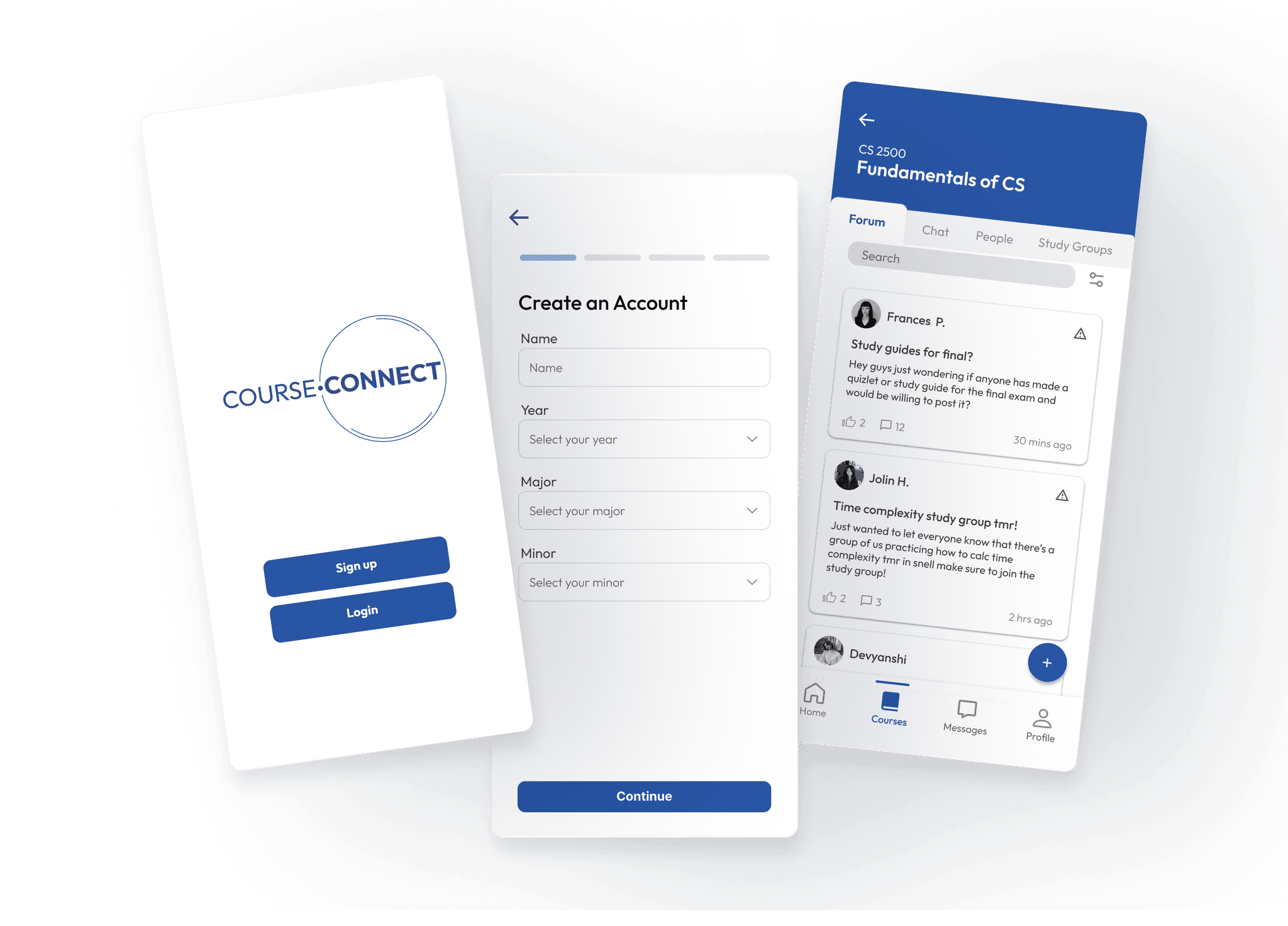
During my HCI class we were tasked with designing a solution to foster a greater sense of belonging among students at Northeastern University. Through background research and user interviews, we learned that students often recognized classmates in their courses but struggled to form meaningful in-class connections. Based on these insights, we focused on creating a mobile application that helps students engage with peers specifically through their courses. Our goal was to turn classroom familiarity into real social connections.
Hypothesis
If Northeastern students can easily find classmates, join study groups, and message peers through a class-focused app, then they will form stronger in-class academic connections by reducing social barriers and facilitating collaboration.
My Role
I contributed to the entire design process, from research to high-fidelity prototypes, collaborating with teammates on ideation, usability testing, and interface design. I worked closely with the team to synthesize insights, iterate on concepts, and ensure the solution aligned with both user needs and functional requirements.
Research & Testing
We conducted interviews with two Northeastern students to understand their experiences with belonging and peer interaction. Using this qualitative research, we developed two user personas, incorporating common pain points and user goals.
We generated 15 ideas, then created two paper prototypes: CourseConnect (focused on in-class connections) and Meet n’ Eat (focused on shared activities). Usability testing on the prototypes allowed us to identify strengths and areas for improvement.
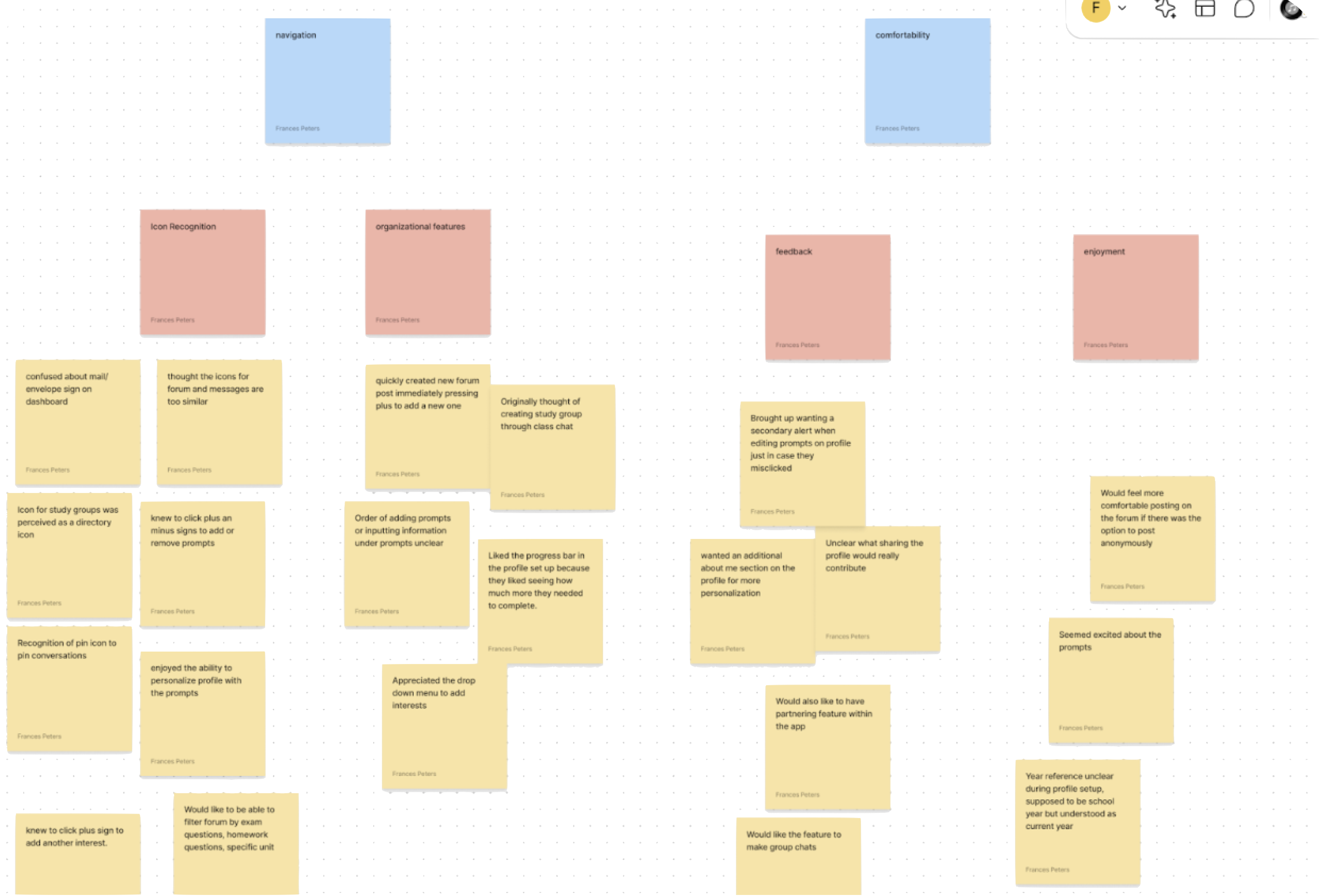
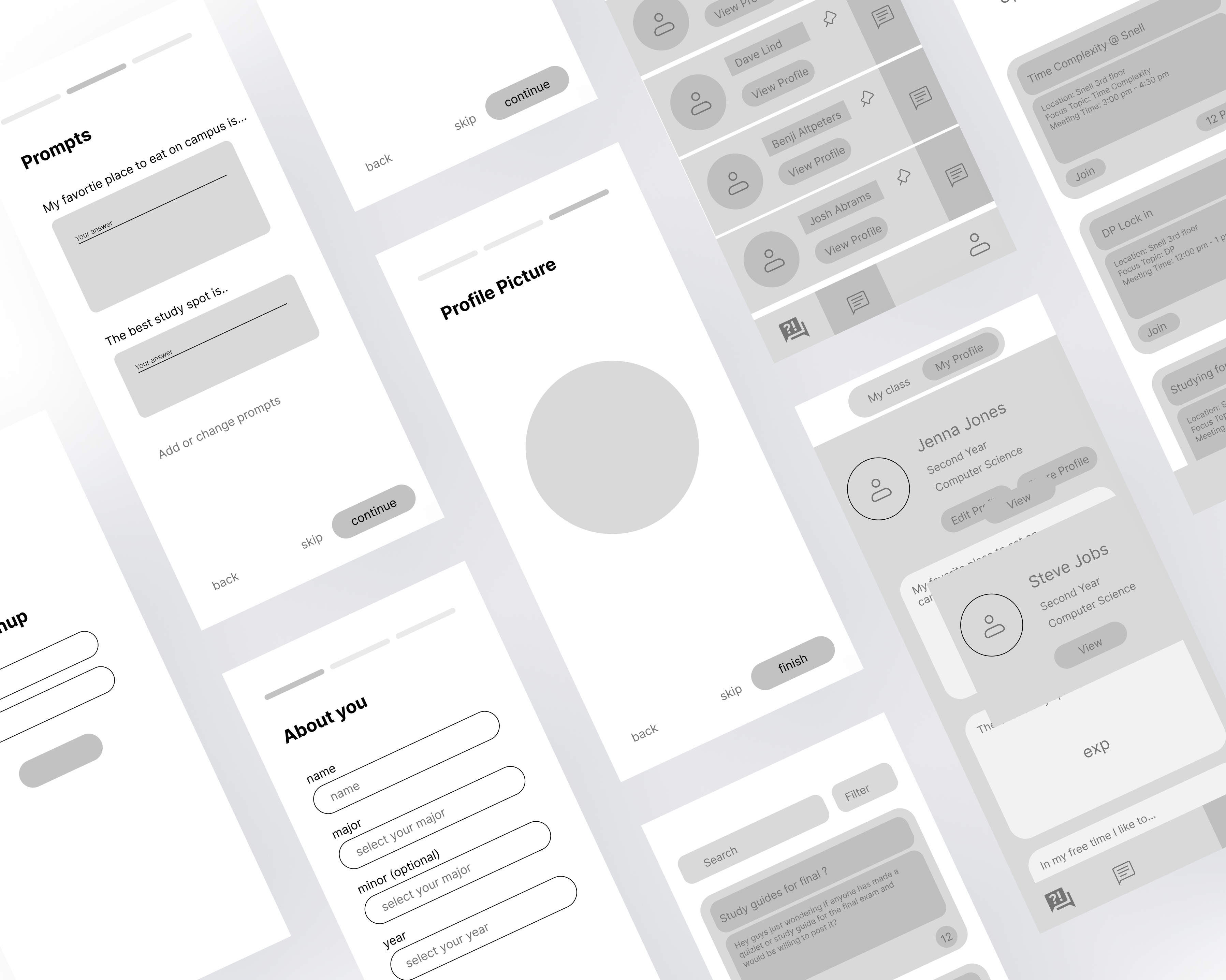
Insights were organized using an affinity diagram, guiding iterative design of low- and high-fidelity digital prototypes. Design decisions were informed by usability heuristics for recognition, clear actions, and personalization, as well as non-functional requirements like learnability and error prevention.
“It can be hard to put yourself out there… but trying to make connections by going to clubs or finding people in common classes or activities helps.”
“I guess proximity… you end up talking more and more and I just feel like the more you share and they share, the more connected you feel.”
Solution
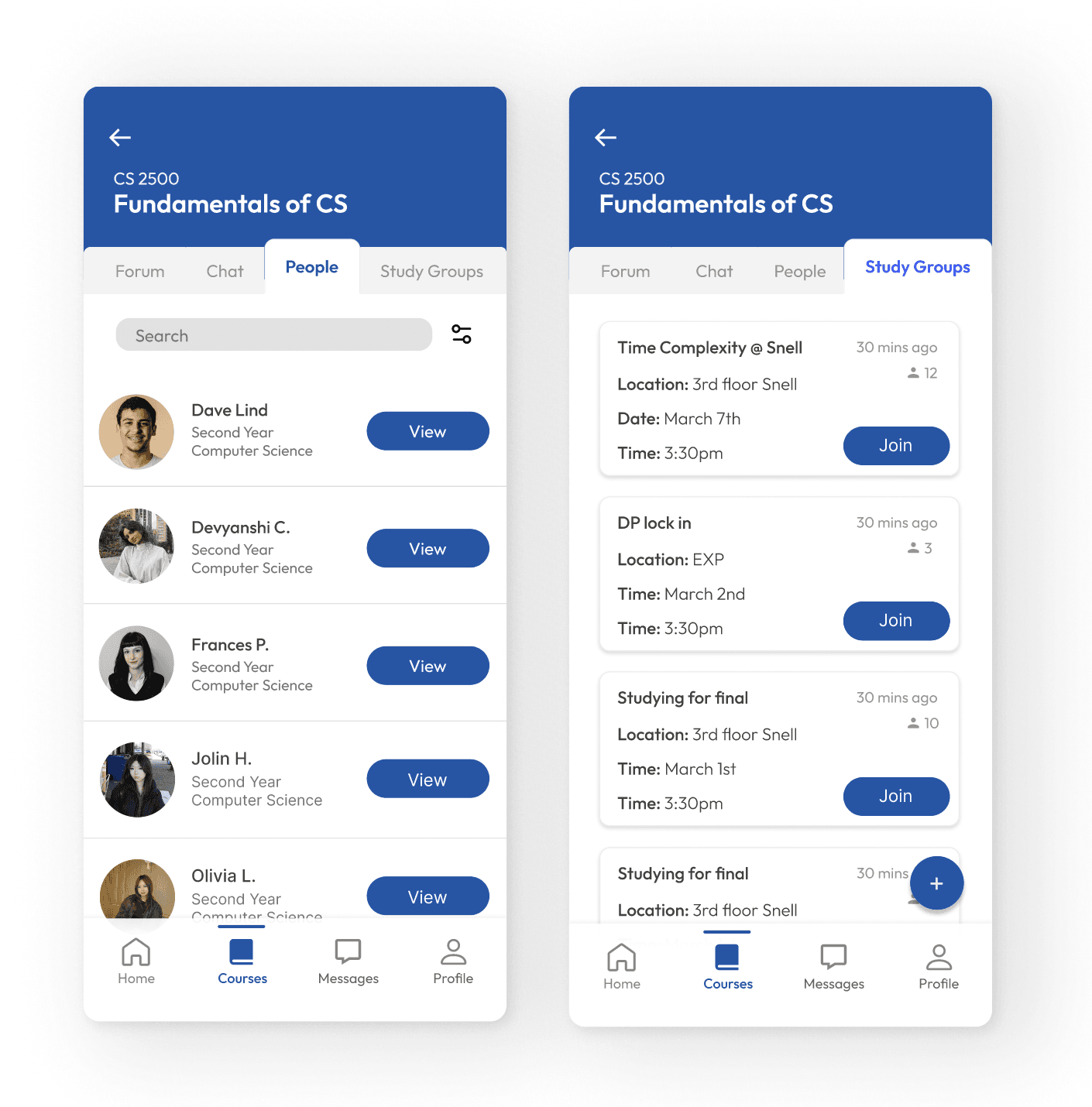
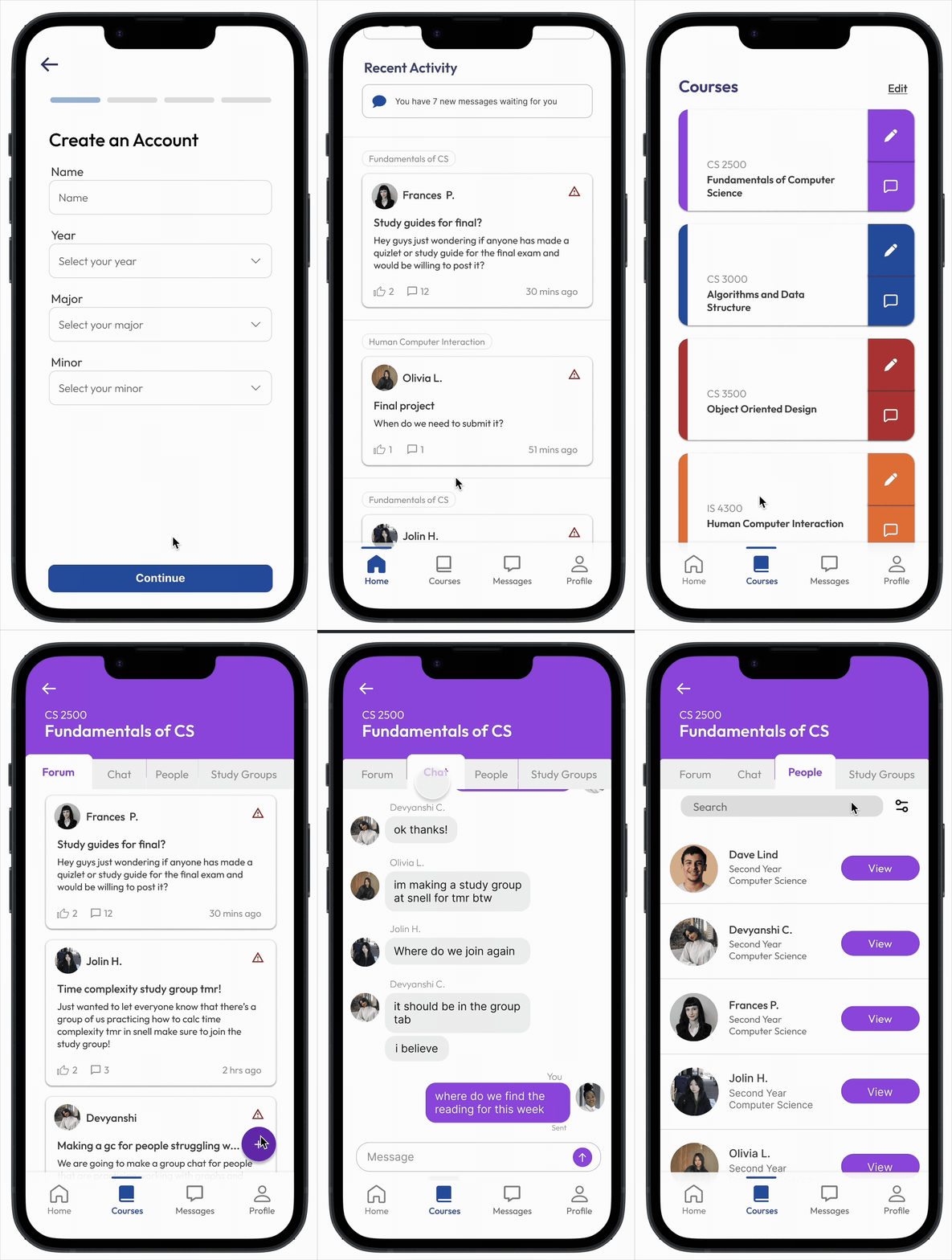
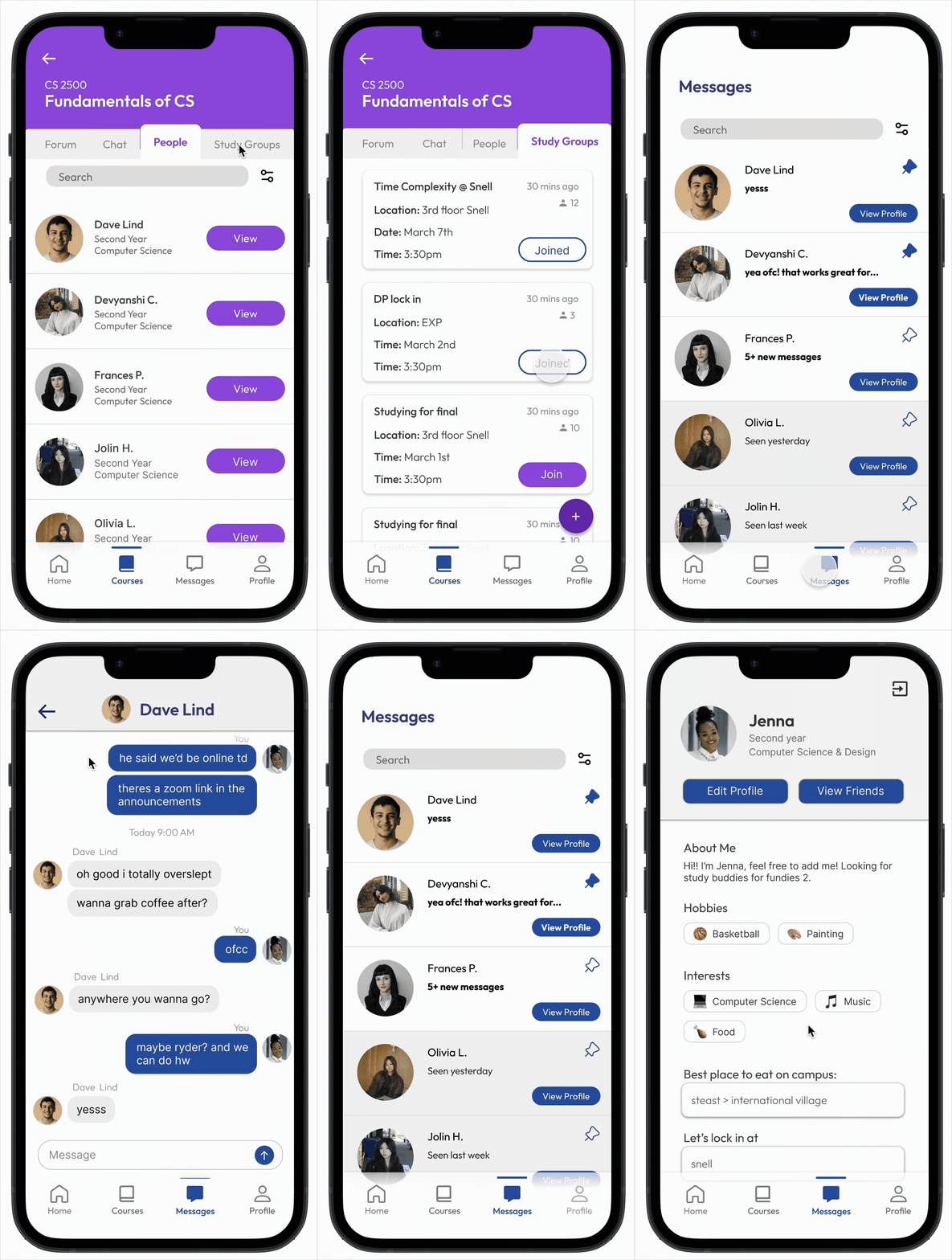
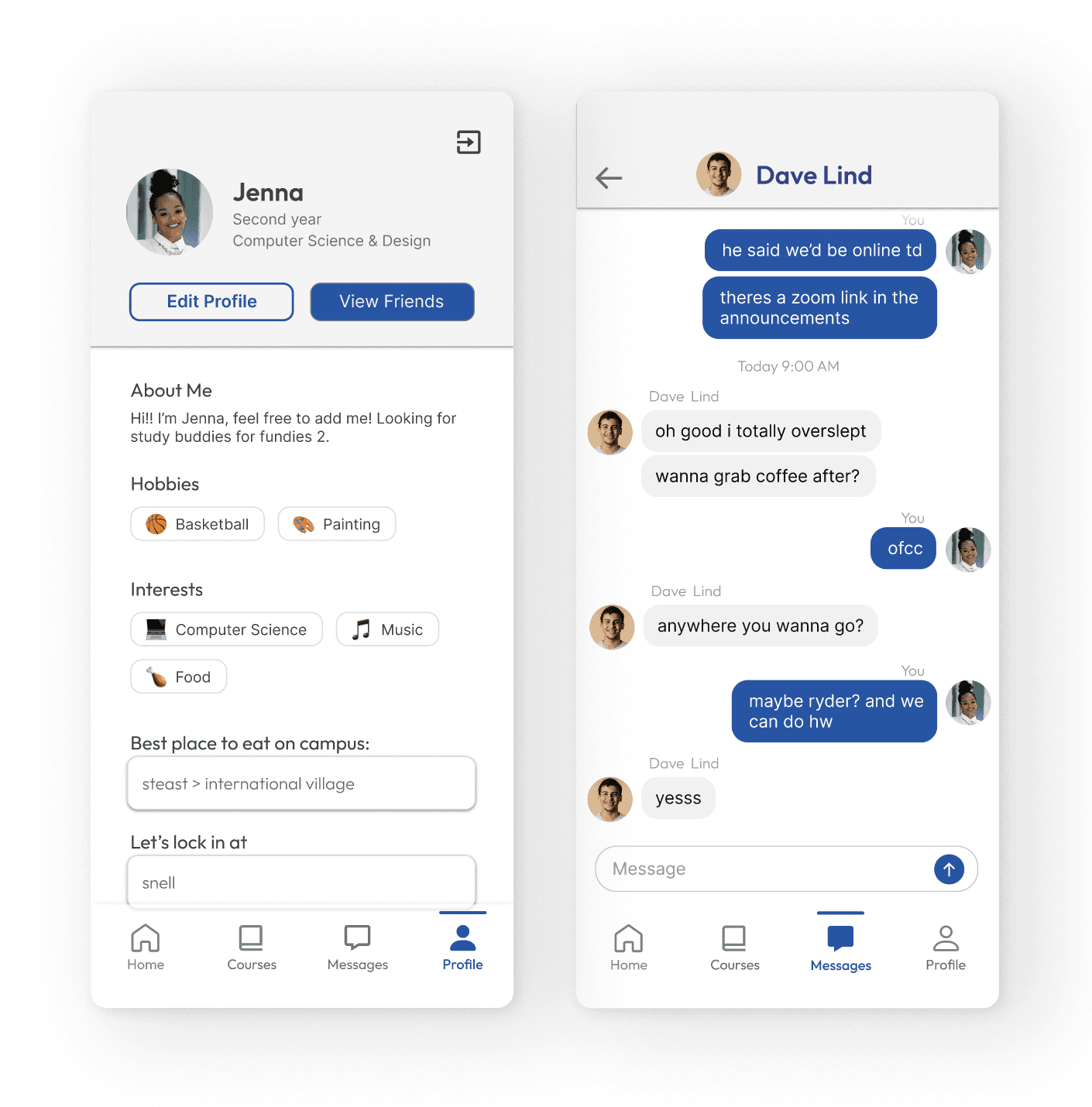
Our prototype, CourseConnect, allowed students to navigate courses, view classmate profiles, participate in forums, send messages, and join study groups. Personalization features and a familiarly structured interface allows for students to identify peers with shared interests and form connections. Usability testing confirmed that students could successfully engage with the app, join study groups, and message classmates, helping bridge the gap between classroom recognition and real interaction.
Challenges
During early testing, certain icons—such as the study group book icon—caused confusion, leading us to introduce clearer labeling. Our initial ideation also focused too heavily on campus-based activities, which limited creative exploration before we expanded our scope. Additionally, usability testing revealed that we prioritized functional features over the emotional experience, prompting us to better align the design with our goal of fostering meaningful social connection.
Impact
Course Connect provided a structured, personalized way for students to connect with classmates, making it easier to form study groups and friendships while also offering a centralized class chat platform. By reducing social friction, CourseConnect aims to help increase student engagement and support a stronger sense of belonging on campus.