Case Study
Luma
Designing for Sustainable Consumption & Awareness
Problem
The United Nations Sustainable Development Goal 12 (SDG 12) aims to ensure responsible consumption and production by 2030, emphasizing waste reduction and increased sustainability awareness. Despite growing concern around climate change, individuals often feel overwhelmed or unsure how to meaningfully adjust their daily consumption habits. Existing solutions tend to focus heavily on cost savings or data tracking, rather than fostering sustainable behaviors. This project explores how design can reduce waste and increase sustainability awareness by supporting more intentional, everyday consumption practices.
Hypothesis
If individuals are provided with an intuitive, integrated system that translates household consumption data into actionable insights and habit-building opportunities, then they will be more likely to adopt sustainable behaviors and reduce waste over time by lowering cognitive barriers and increasing awareness.
My Role
I led the end-to-end design process, conducting research, synthesizing insights, ideating concepts, and developing prototypes. I independently explored the problem space, analyzed competitors, and iterated on interaction models to ensure the solution balanced clarity, engagement, and behavioral impact.
Research & Testing
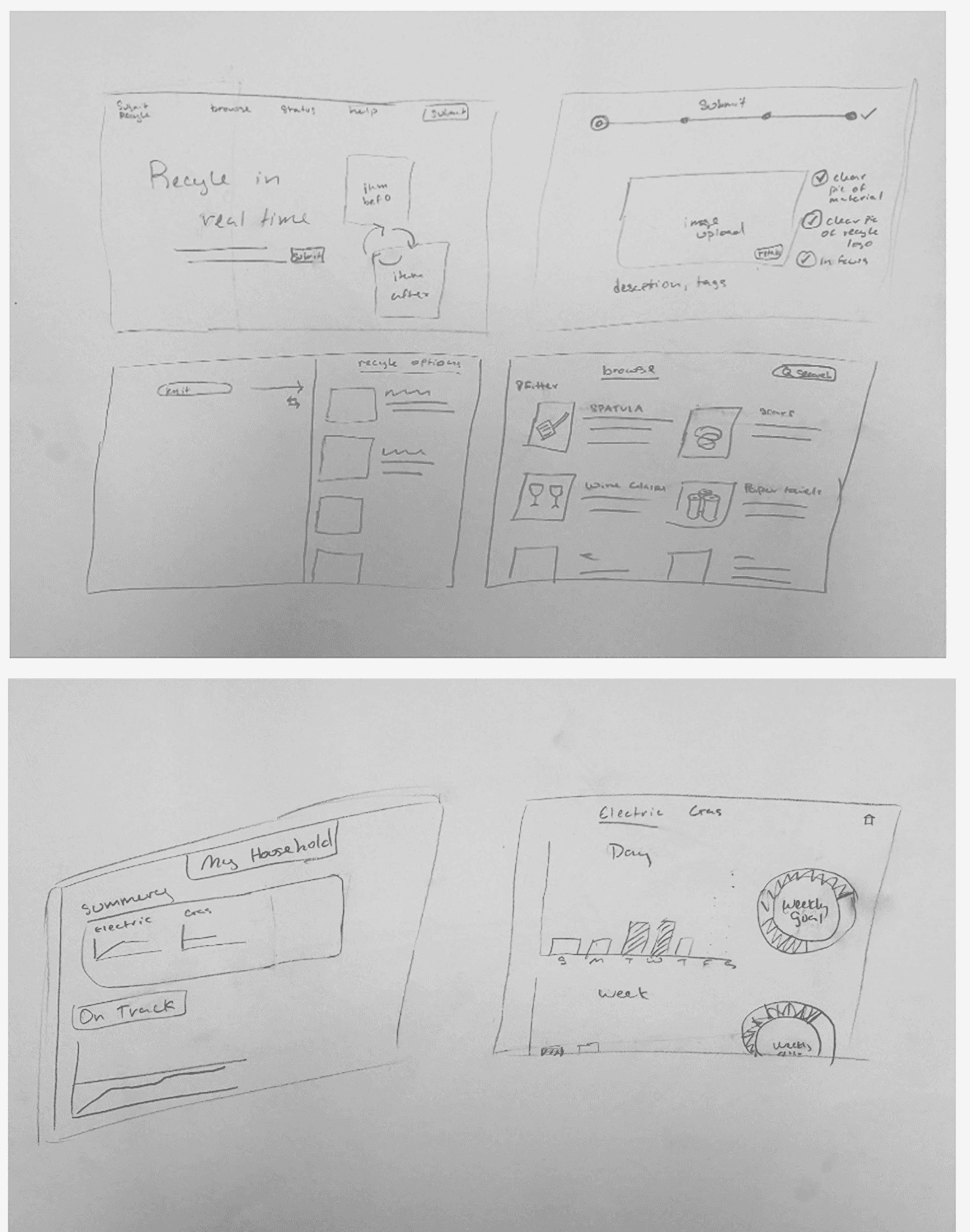
I conducted secondary research to understand barriers to sustainable consumption, exploring topics such as the limitations of recycling systems, rising fossil fuel dependence, increasing energy demand, and the widespread feeling of individual helplessness in addressing climate change.
To better understand the current product landscape, I analyzed existing household energy tracking tools such as Sense and Emporia. These platforms often prioritize cost reduction over sustainability, present overly complex data visualizations, and lack features that encourage long-term behavioral change or habit formation.
User insights revealed a desire for motivation and accountability, which inspired the inclusion of a community-driven gamification feature. Based on these findings, I brainstormed 10 concept directions and synthesized key opportunities around engagement, personalization, and reducing cognitive overload.
“I also think gamifying things is very motivating. So if you are competing against other people in your community for a better, a better energy score meaning lower energy score, and you're winning, there's something very enticing about that.”
“I mean, it's hard to watch dollar signs just being, you know, going out the door and just be like, oh, that doesn't matter.”
Solution
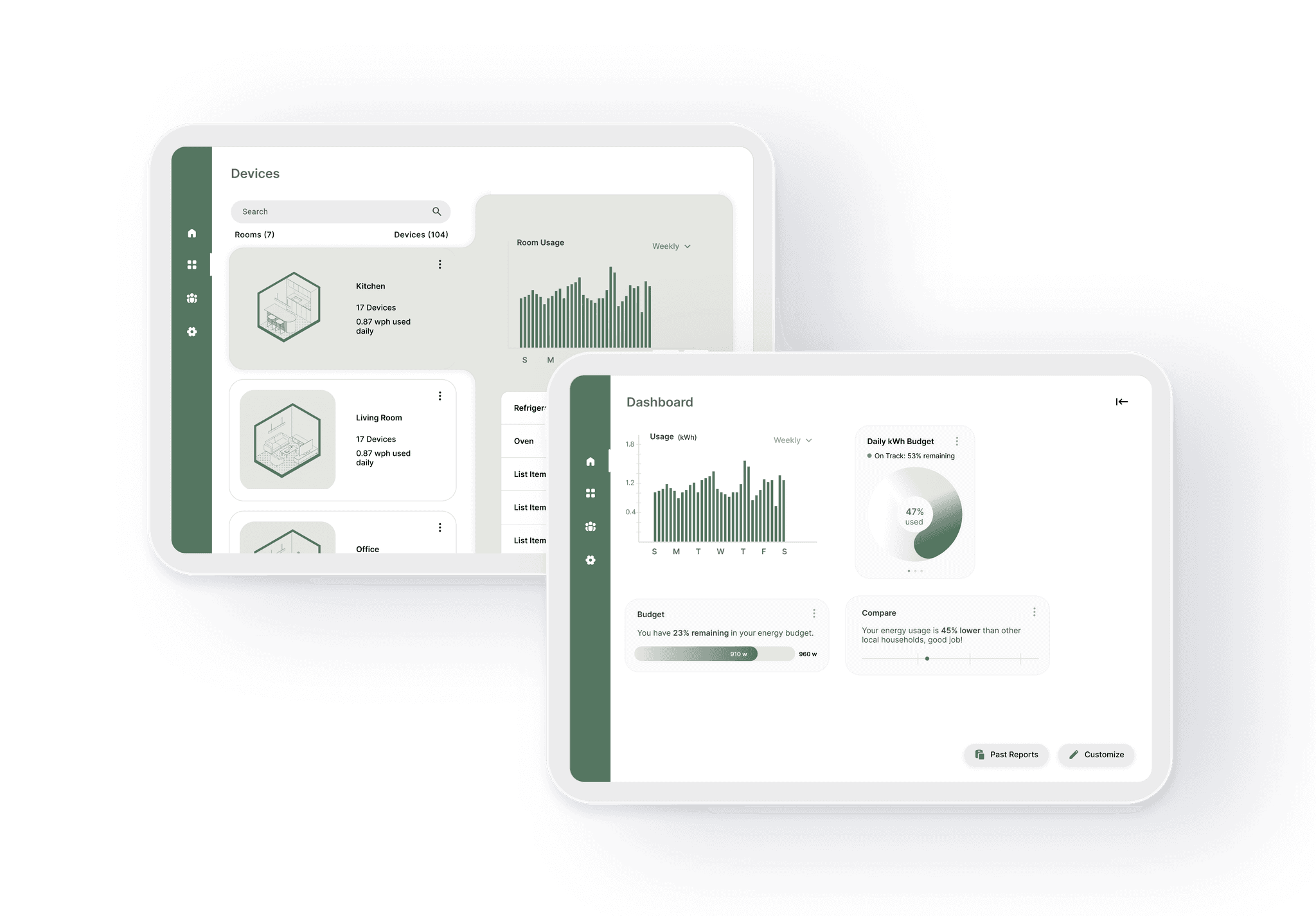
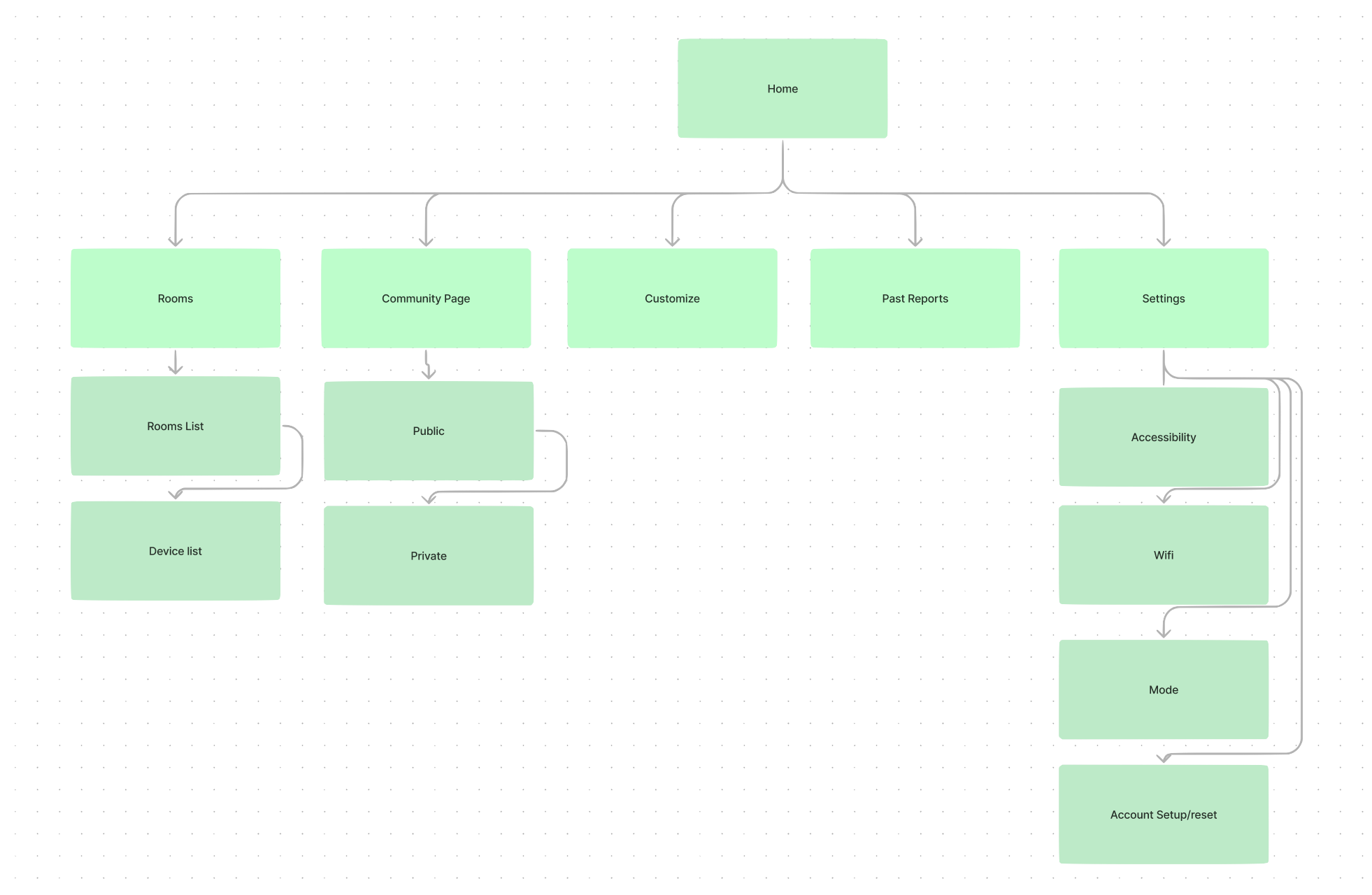
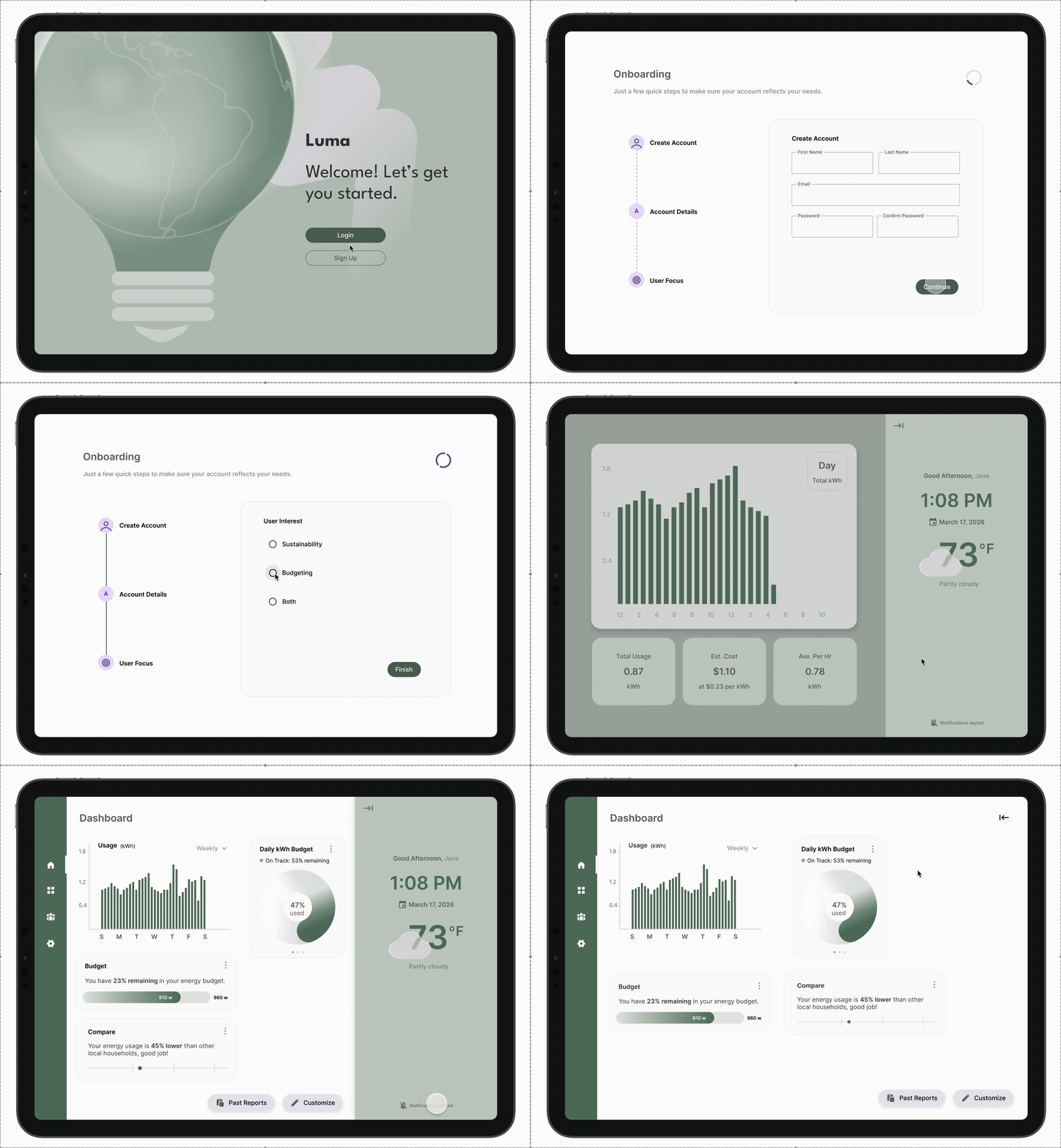
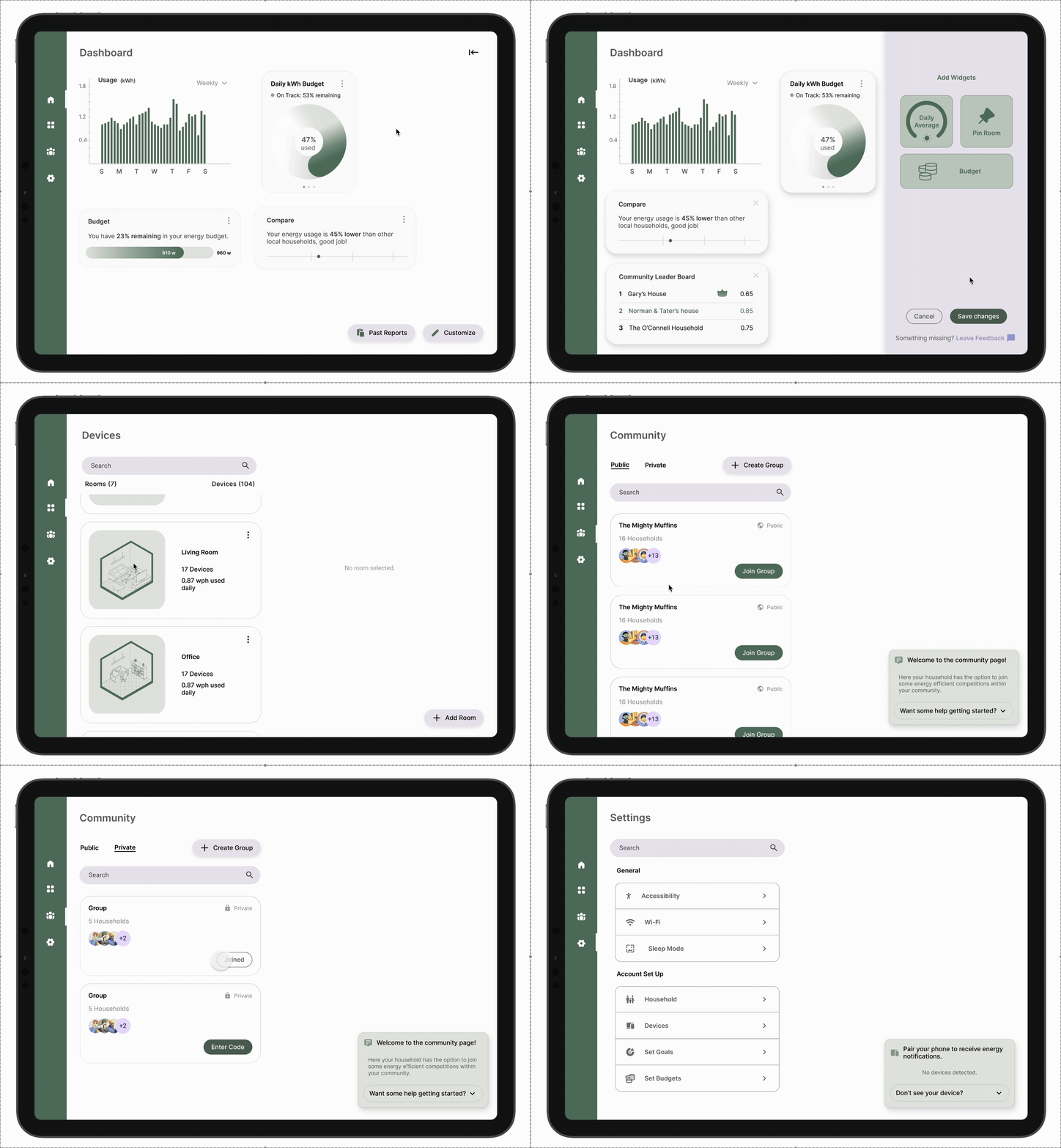
Luma is a wall-mounted tablet designed to integrate directly into the home environment, making sustainable decision-making visible and unavoidable within daily routines—similar to how users interact with a thermostat. Unlike mobile apps that can be easily ignored, Luma creates a persistent touchpoint for awareness and action. The system translates complex household consumption data into clear, actionable insights while encouraging sustainable habits through personalized recommendations and feedback loops. A key differentiator is Luma’s community page, which incorporates gamification elements inspired by user interviews. Users can engage with others, track progress, and stay motivated through shared goals and light competition, reinforcing long-term behavior change. Luma also offers deep personalization. Users can tailor the interface based on their priorities—whether focused on budgeting or sustainability—with dynamic language and widgets that adapt accordingly. Customizable dashboards allow users to control the level of data displayed, reducing cognitive overload while maintaining flexibility. A companion mobile pairing feature extends the experience by delivering notifications and updates directly to the user’s phone.
Challenges
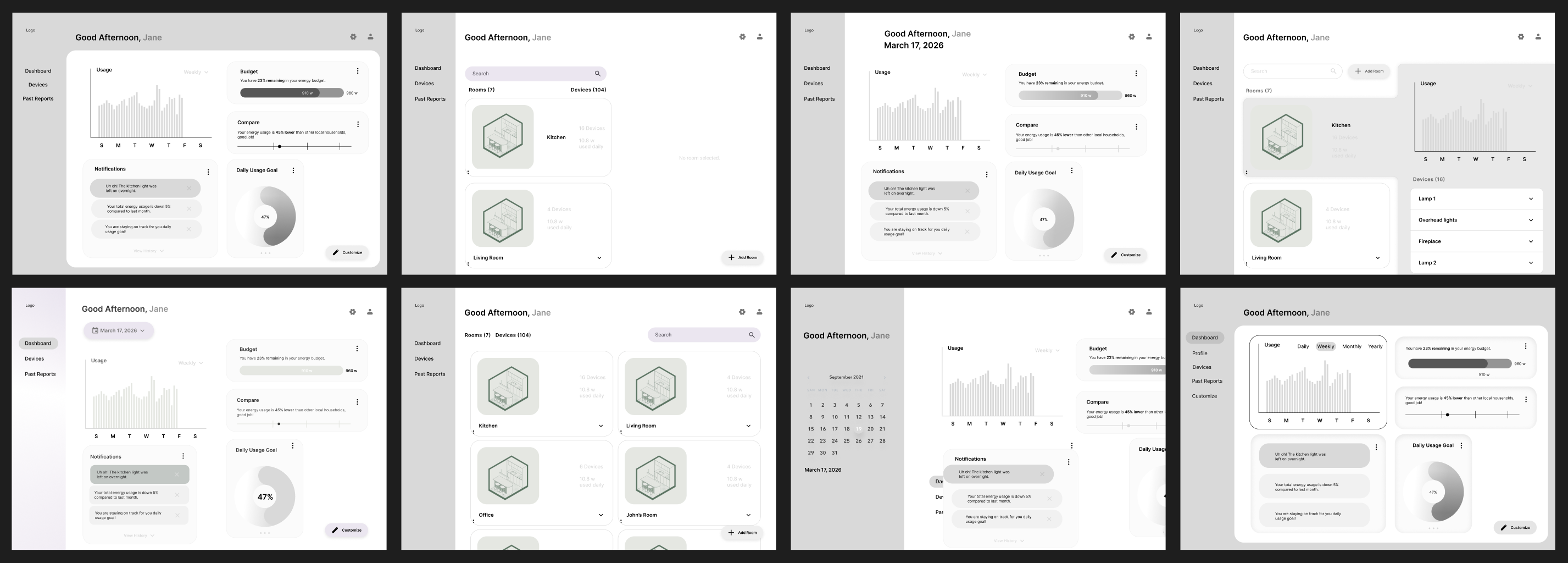
Designing Luma required balancing complex data with clarity, which led to simplifying the visual hierarchy and introducing customizable widgets to reduce cognitive overload. Creating sustained engagement beyond passive tracking was another challenge, addressed through gamification and community-driven features. Additionally, bridging the gap between physical and digital interaction required rethinking the form factor, resulting in a wall-mounted system that integrates seamlessly into daily routines while extending functionality through mobile notifications.
Impact
Luma introduces a more human-centered approach to sustainable consumption by combining visibility, personalization, and motivation. By embedding the experience into the physical home environment and reinforcing it through community engagement and mobile touchpoints, the concept encourages consistent interaction and stronger habit formation. This approach empowers users to feel a greater sense of agency in reducing their environmental impact.